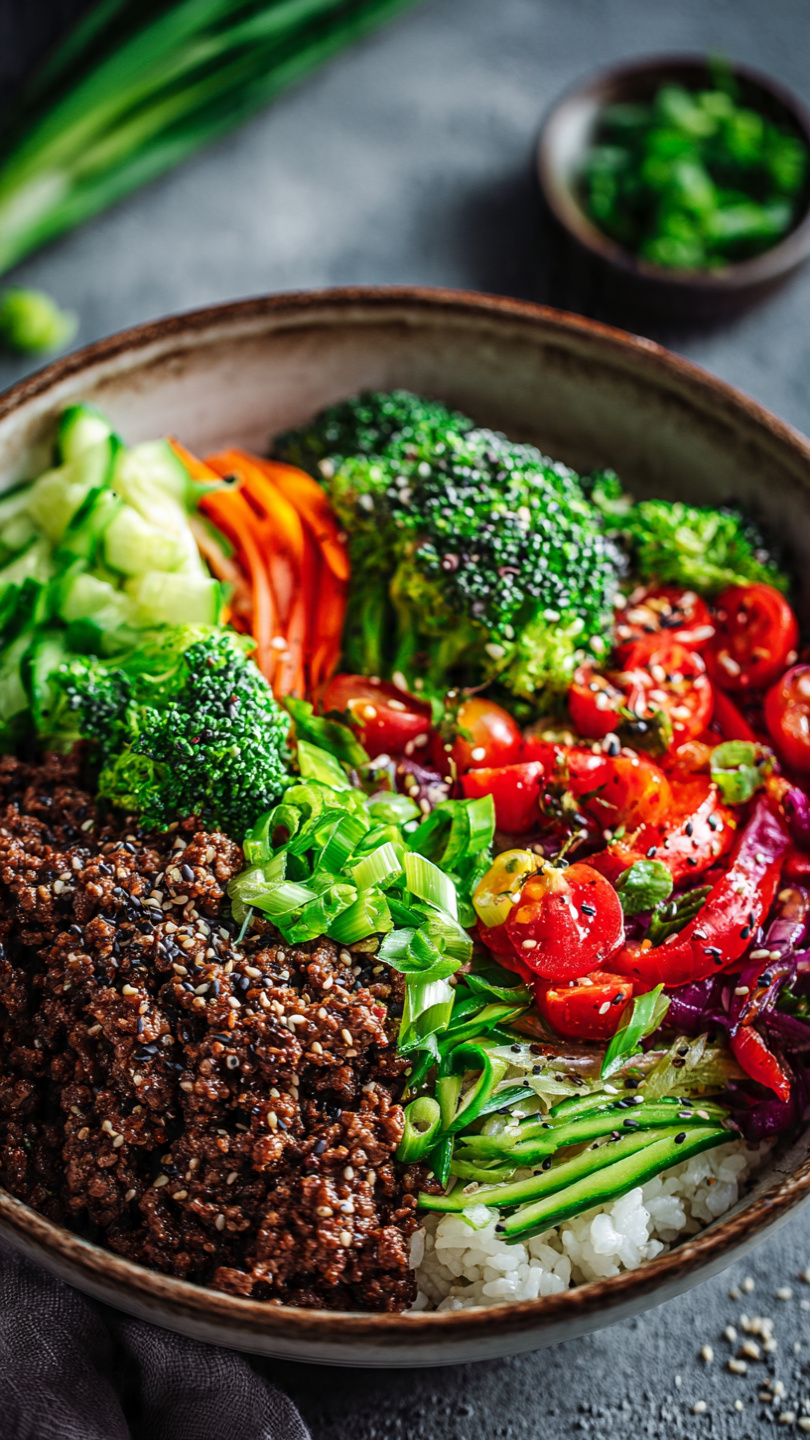
Keto Korean Ground Beef Bowl
This Keto Korean Ground Beef Bowl is a fast, flavor-packed low carb dinner ready in under 30 minutes, with savory, garlicky beef served over cauliflower rice for the ultimate keto Asian ground beef recipe.

The Keto Beef Bowl You Will Actually Crave Every Week
If you have been searching for a low carb dinner that tastes indulgent, comes together in under 30 minutes, and satisfies that craving for bold, savory Asian flavors, you just found it. This Keto Korean Ground Beef Bowl is everything: garlicky, slightly spicy, deeply umami-rich beef spooned over fluffy cauliflower rice and finished with a runny egg and a shower of sesame seeds.
Think of it as your weeknight hero. It is the kind of meal that makes keto feel effortless rather than restrictive, and once you make it, it absolutely earns a permanent spot in your meal prep rotation.
Why This Low Carb Korean Beef Bowl Works So Well
Traditional Korean beef bowls (bulgogi-style) are built on soy sauce, sugar, and sesame, served over a generous mound of white rice. This keto version keeps every bit of that flavor DNA intact while swapping out the high-carb components for smarter alternatives:
- Coconut aminos replaces soy sauce for a slightly sweeter, lower-sodium base
- Monk fruit sweetener gives the sauce that subtle caramel note without spiking blood sugar
- Gochujang brings authentic Korean heat and depth (just use a low-sugar brand)
- Cauliflower rice soaks up all that savory sauce beautifully
The result is a Keto Korean Beef Bowl that clocks in at around 7 grams of net carbs per serving. That is a full, restaurant-worthy bowl for the carb budget of a small snack.
Having the right pantry staples makes all the difference when you are building bold flavors fast. Toasted sesame oil, a quality gochujang, and coconut aminos are the three ingredients that elevate this dish from good to genuinely crave-worthy, and a heavy-bottomed wok or skillet ensures you get that perfect sear on the beef.
The Secret to Perfectly Browned Keto Ground Beef
This is where a lot of home cooks lose flavor without realizing it: do not stir the beef constantly. After you add the ground beef to your hot skillet, let it sit undisturbed for a minute or two before breaking it apart. That contact with the hot pan builds a golden, caramelized crust that adds enormous depth to the final dish.
Also, drain excess fat only if absolutely necessary. With an 80/20 ground beef blend, most of that fat will absorb into the sauce and carry flavor throughout the bowl. It is one of the reasons this Keto Asian Ground Beef recipe tastes richer than you might expect from such a simple ingredient list.
Chef's Tip: Add the garlic and ginger to the pan before the beef, not after. Those 30 seconds of bloom time in hot oil coax out aromatic compounds that will perfume the entire dish.
Customize Your Keto Korean Beef Bowl
One of the best things about this recipe is how flexible it is. Once you have the base sauce and the browned beef, you can go in several directions:
- Spicier: Double the gochujang or finish with a drizzle of chili crisp oil
- Extra veggie-forward: Stir in a handful of shredded cabbage, sliced mushrooms, or baby bok choy in the last 2 minutes of cooking
- Meal prep style: Skip the egg topping and pack the beef and cauliflower rice in separate containers for grab-and-go lunches all week
- Keto Korean Short Rib vibes: Swap ground beef for thinly sliced beef short rib strips. The same sauce works perfectly as a marinade for keto low carb Korean short ribs on the grill or in a hot skillet
For anyone exploring Keto Ground Beef Bowl Recipes beyond the usual taco salad or bunless burger, this bowl opens up a whole new flavor direction that feels exciting without being complicated.
What Makes This a True Low Carb Korean Beef Bowl
Beyond the obvious rice swap, the real keto discipline in this dish is in the sauce. Many store-bought Korean marinades and gochujang pastes are loaded with rice flour and corn syrup. Reading labels is non-negotiable here. A tablespoon of the wrong gochujang can add 5 to 8 grams of carbs to your bowl before you have even added anything else.
Stick with brands that list fermented chili, salt, and minimal fillers, or look specifically for keto-labeled versions increasingly available at Asian grocery stores and online. Your Low Carb Korean Beef Bowl will taste just as authentic with the right ingredient choices.
Heads up: Coconut aminos is naturally slightly sweeter than soy sauce, so the monk fruit sweetener in this recipe is intentionally modest. Taste your sauce before adding it to the pan and adjust to your preference.
Ready to build your bowl? Here is the complete recipe with every measurement and step laid out:
Keto Korean Ground Beef Bowl
This Keto Korean Ground Beef Bowl is a fast, flavor-packed low carb dinner ready in under 30 minutes, with savory, garlicky beef served over cauliflower rice for the ultimate keto Asian ground beef recipe.
Ingredients
- 1 1/2 lb ground beef, 80/20 blend for best flavor
- 1 tbsp sesame oil, toasted
- 4 garlic cloves, minced
- 1 tsp fresh ginger, grated
- 3 tbsp coconut aminos, or low-sodium soy sauce
- 1 tbsp gochujang, check label for low-sugar variety
- 1 tbsp rice vinegar, unseasoned
- 1 tsp monk fruit sweetener, or erythritol
- 1/2 tsp red pepper flakes, adjust to taste
- 3 green onions, thinly sliced, whites and greens separated
- 4 cups cauliflower rice, fresh or frozen, cooked
- 1 tbsp sesame seeds, toasted, for garnish
- 4 large eggs, fried or soft-boiled, optional topping
- 1 tbsp avocado oil, for cooking
Instruction
Cook the cauliflower rice according to package directions or in a dry skillet over medium-high heat for 5 to 6 minutes, stirring occasionally, until tender and any excess moisture has evaporated. Season lightly with salt and set aside.
In a small bowl, whisk together the coconut aminos, gochujang, rice vinegar, monk fruit sweetener, and red pepper flakes. Set the sauce aside.
Heat avocado oil in a large skillet or wok over medium-high heat until shimmering. Add the white parts of the green onions, minced garlic, and grated ginger. Stir-fry for 30 to 45 seconds until fragrant.
Add the ground beef to the skillet, breaking it apart with a wooden spoon. Cook for 7 to 9 minutes, stirring occasionally, until the beef is fully browned and no pink remains. Drain any excess fat if needed.
Pour the sauce over the browned beef and stir well to coat. Cook for 1 to 2 minutes more until the sauce has absorbed slightly and everything is glossy and fragrant. Remove from heat and drizzle with sesame oil.
Divide the cooked cauliflower rice among four bowls. Spoon the Korean beef mixture generously on top.
Garnish each bowl with sliced green onion tops, toasted sesame seeds, and a fried or soft-boiled egg if using. Serve immediately.
Equipment
- Large skillet or wok
- Small mixing bowl
- Whisk
- Wooden spoon or spatula
- Cutting board and knife
- Grater or microplane (for ginger)
Notes
Serving, Storing, and Making It Ahead
This Keto Korean Ground Beef bowl is as practical as it is delicious. Here is how to get the most out of it:
To serve: Top each bowl with a soft-boiled or fried egg for extra richness and protein. Sliced cucumber, pickled daikon, or a few drops of toasted sesame oil on the cauliflower rice all make lovely additions.
To store: Keep the beef mixture and cauliflower rice in separate airtight containers in the refrigerator for up to 4 days. Storing them together can make the rice watery.
To freeze: The beef freezes exceptionally well. Portion it into freezer-safe bags and freeze for up to 2 months. Thaw overnight in the refrigerator and reheat in a skillet for a meal that tastes freshly made.
For meal prep: This recipe scales beautifully. Double the batch on Sunday and you have Low Carb Korean Beef ready to go all week, which makes it one of the most practical Keto Beef Bowl recipes you can add to your rotation.
Whether you are new to keto or a seasoned low-carb eater looking to shake up your usual routine, this bowl delivers every time. Bold, satisfying, and genuinely fast, it is proof that eating keto never has to feel like a compromise.