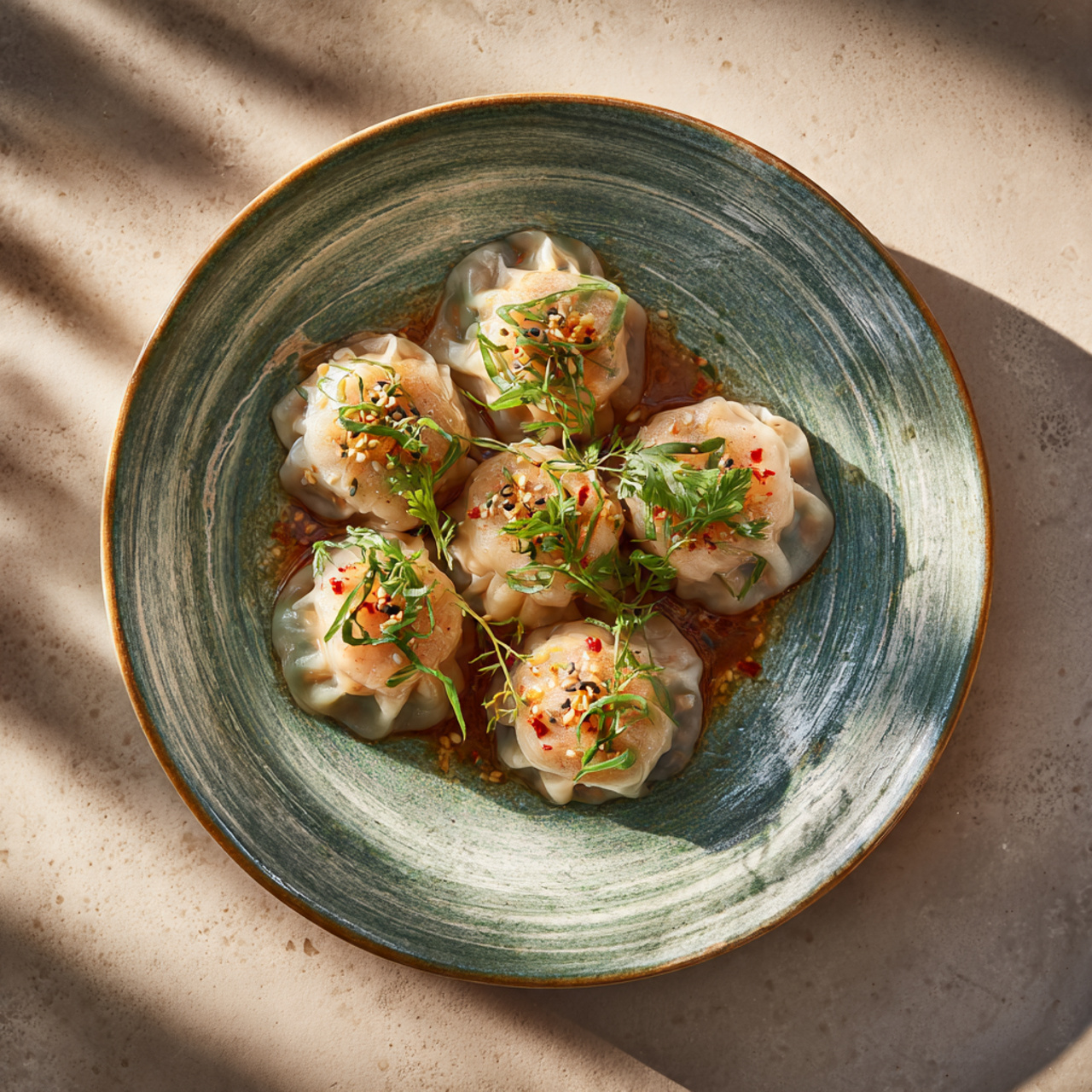
Shrimp and Chive Dumplings (Crispy Potsticker Style)
These Shrimp and Chive Dumplings are juicy, golden-bottomed, and packed with fresh flavor. A foolproof dim sum recipe you can make right at home.

The Shrimp and Chive Dumplings You Will Want to Make Every Weekend
There is something almost magical about a perfectly made potsticker. The bottom is lacquered and golden, shattering just slightly when you bite through. The wrapper is tender and chewy, yielding to a filling that is juicy, savory, and bright with fresh chives and ginger. If you have ever ordered Shrimp and Chive Dumplings at dim sum and thought, "I could never make these at home," this recipe is here to prove you wrong.
This is a proper Shrimp and Chive Dumpling recipe, built from scratch with a hot-water dough that is forgiving to roll and satisfying to fold. It is the kind of recipe that turns into a weekend ritual, especially if you get the family or friends involved in the folding. And the good news? Once you have the method down, the possibilities for dumpling fillings are endless.
Why This Recipe Works
A great potsticker lives and dies by three things: the dough, the filling, and the technique. Get all three right and you are golden, literally.
The hot-water dough is the secret weapon here. Unlike a cold-water dough, boiling water partially cooks the flour starches, resulting in a wrapper that is pliable, slightly translucent when cooked, and much easier to work with than traditional pasta dough. It does not crack when you fold it, and it holds up beautifully to both the fry and the steam.
The filling combines rough-chopped shrimp (not a paste, which keeps things texturally interesting), fresh chives for that mild oniony brightness, ginger for warmth, and a splash of sesame oil and soy sauce for depth. Stirring the filling in one direction before wrapping is a small but meaningful step borrowed from classic Korean dumpling filling technique: it tightens everything up so the filling stays cohesive during cooking.
The technique is the classic potsticker method: sear, steam, then finish. The result is crispy on one side, tender everywhere else, and cooked through without drying out.
The Right Tools Make a Real Difference
For dumplings specifically, a good non-stick skillet with a well-fitting lid is non-negotiable. You need even heat for a uniform sear and a sealed environment for the steam phase. A thin, flexible wooden dowel instead of a bulky rolling pin also gives you much more control when rolling small wrappers.
How to Fold Dumplings (Even If You Are New to This)
Do not let the folding intimidate you. There are dozens of pleating styles used across dim sum, Korean mandu, and Japanese gyoza traditions, but for this recipe, a simple half-moon fold with a few pinched pleats is all you need.
Here is the basic approach:
- Place the filling in the center of the wrapper, leaving a clean border around the edge.
- Dampen the edge with a little water using your fingertip or a small brush.
- Fold the wrapper in half over the filling to form a half-moon shape.
- Starting from one end, fold small pleats along the top sealed edge and press each one firmly against the flat back edge.
- Press the full seam together to make sure there are no gaps.
Chef's Tip: Do not overfill. One heaped teaspoon is the sweet spot. Too much filling and the wrapper will not seal properly, which leads to dumplings bursting open in the pan.
If pleating feels fussy, a simple crimped half-moon with no pleats works just as well for pan-frying. The golden bottom will still steal the show.
Building Your Dim Sum Appetizer Spread
Shrimp and Chive Dumplings Dim Sum style means they belong on a table with other small, shareable dishes. If you are building out a spread, these pair beautifully with:
- Steamed edamame with flaky salt
- Cucumber salad with rice vinegar and chili flakes
- Miso soup to sip alongside
- A quick chili crisp dipping sauce made from soy sauce, rice vinegar, sesame oil, and a generous spoonful of your favorite chili oil
These dumplings also freeze exceptionally well, which means you can make a double batch and have an impressive appetizer ready to go on any given weeknight. Lay them flat on a parchment-lined baking sheet to freeze individually before transferring to a bag. Cook straight from frozen with just a couple of extra minutes of steam time.
Tips for Perfect Potsticker Dumplings Every Time
- Rest your dough. Do not skip the 30-minute rest. It relaxes the gluten and makes rolling out thin, even wrappers dramatically easier.
- Keep wrappers covered. While you fold, keep rolled wrappers and assembled dumplings under a lightly damp towel so they do not dry out.
- Use medium-high heat. A hot pan is what gives you that deep golden crust. If the pan is not hot enough, the dumplings will steam from the oil instead of searing.
- Do not peek too soon. Once you add the water and cover the lid, leave it alone for at least 5 minutes. Lifting the lid too early releases the steam and slows the cooking.
Chef's Tip: If you hear vigorous sizzling when you remove the lid at the end, that is the water finishing off and the bottoms recrisping. Give it that extra minute and resist the urge to rush.
Ready to make your own batch? Here is everything you need laid out step by step:
Shrimp and Chive Dumplings (Crispy Potsticker Style)
These Shrimp and Chive Dumplings are juicy, golden-bottomed, and packed with fresh flavor. A foolproof dim sum recipe you can make right at home.
Ingredients
- 2 cups all-purpose flour, plus extra for dusting
- 3/4 cup boiling water, just off the boil
- 2 tbsp cold water
- 3/4 lb raw shrimp, peeled, deveined, and roughly chopped
- 1/2 cup fresh chives, finely chopped
- 1 tbsp fresh ginger, finely grated
- 2 garlic cloves, minced
- 1 tbsp soy sauce, low sodium preferred
- 1 tsp sesame oil, toasted
- 1 tsp rice vinegar
- 1/4 tsp white pepper
- 1/2 tsp kosher salt
- 1 tsp cornstarch, helps bind the filling
- 2 tbsp neutral oil, such as vegetable or avocado oil, for pan-frying
- 3/8 cup water, for steaming in the pan
Instruction
Make the dough: Place the flour in a large bowl and slowly pour in the boiling water while stirring with a fork or chopsticks. Add the cold water and mix until a shaggy dough forms. Turn out onto a floured surface and knead for 5 to 7 minutes until smooth. Wrap in plastic wrap and rest for at least 30 minutes at room temperature.
Make the filling: In a medium bowl, combine the chopped shrimp, chives, ginger, garlic, soy sauce, sesame oil, rice vinegar, white pepper, salt, and cornstarch. Stir vigorously in one direction for about 1 minute until the mixture becomes slightly sticky and cohesive. Cover and refrigerate while you roll the wrappers.
Roll the wrappers: Divide the rested dough into 4 equal portions. Roll each portion into a log and cut into roughly 8 equal pieces (32 pieces total). Lightly flour your surface, then use a small rolling pin or dowel to roll each piece into a thin circle about 3 to 3.5 inches in diameter, rotating the dough as you roll to keep it round.
Fill and fold the dumplings: Place about 1 teaspoon of filling in the center of each wrapper. Dampen the edge with a little water, fold the wrapper in half over the filling, and pleat the top edge against the flat back edge to seal. Press firmly to ensure there are no air pockets. Place finished dumplings on a lightly floured baking sheet.
Pan-fry the dumplings: Heat a large non-stick skillet or well-seasoned cast iron pan over medium-high heat. Add the neutral oil and swirl to coat. Place the dumplings flat-side down in a single layer and cook undisturbed for 2 to 3 minutes until the bottoms are deep golden brown.
Steam to finish: Carefully pour the water into the pan (it will splatter). Immediately cover with a tight-fitting lid and steam for 5 to 6 minutes until the water is nearly evaporated and the filling is cooked through.
Uncover and crisp: Remove the lid and let any remaining water cook off, about 1 more minute. The bottoms should be crispy and lacquered. Remove from heat and serve immediately with your dipping sauce of choice.
Equipment
- Large mixing bowl
- Medium mixing bowl
- Rolling pin or wooden dowel
- Large non-stick skillet or cast iron pan with a lid
- Baking sheet
- Plastic wrap
- Pastry brush or small bowl of water for sealing
Notes
Serving, Storing, and Making Ahead
These dumplings are best eaten fresh out of the pan, crispy bottom and all. If you are serving a group, keep finished batches in a single layer on a baking sheet in a low oven (around 200 degrees F) while you cook the rest.
For storage, cooked dumplings keep well in the fridge for up to 3 days. Reheat them in a lightly oiled skillet over medium heat for 2 to 3 minutes per side to bring the crispy bottom back to life. Avoid the microwave if you can, as it turns the wrappers soft and a little gummy.
If you want to make these ahead for a party or a busy week, freeze them raw rather than cooked. The texture after freezing and cooking from raw is almost indistinguishable from fresh, which is more than you can say for most things you pull out of the freezer.
However you make them, these Shrimp and Chive Dumplings are the kind of recipe that earns a permanent spot in your rotation. Once you taste that first crispy, juicy, chive-bright bite, you will understand exactly why.