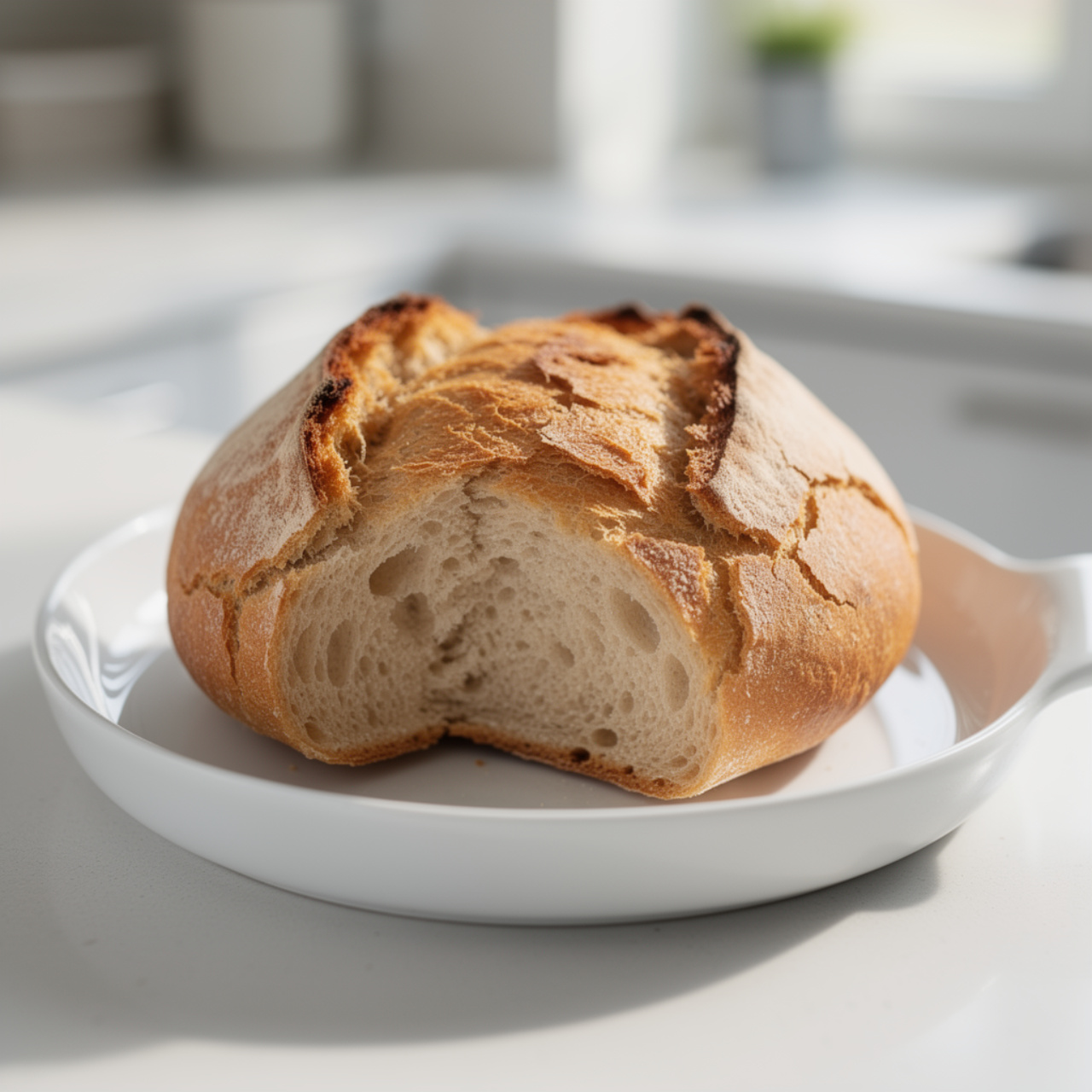
Filipino Spanish Bread: Soft, Buttery Rolls with Sweet Filling
Filipino Spanish Bread is a beloved bakery classic, soft milk bread rolls packed with a rich buttery brown sugar filling and rolled in breadcrumbs for that iconic golden crust.
The Smell of a Filipino Bakery, Right From Your Oven
If you grew up Filipino or were lucky enough to live near a Filipino bakery, you already know the feeling. That warm, buttery, faintly sweet smell drifting out of the panaderya in the early morning hours, long before the glass case is even full. Right at the center of that memory, nine times out of ten, is Filipino Spanish Bread.
Despite the name, this is not a Spanish recipe at all. Spanish Bread is a proudly Filipino creation, a staple of the local panaderya (bakery) tradition that has been feeding families for generations. Soft, pillowy milk bread dough gets wrapped around a rich filling of brown sugar and butter, then rolled in fine breadcrumbs before baking to a beautiful golden finish. The result is somewhere between a sweet roll and a soft pretzel, and it is completely, dangerously snackable.
This is the kind of Filipino Spanish bread recipe that earns you serious points at a potluck, a family brunch, or an afternoon merienda spread.
What Makes This Recipe Special
Good Spanish bread lives or dies by two things: the softness of the dough and the ratio of filling to bread. Too little filling and it tastes plain. Too much and it leaks everywhere. This recipe gets the balance right.
A few things that set this version apart:
- Bread flour for that classic chewy-yet-soft crumb you find in authentic senorita bread from Filipino bakeries
- Dark brown sugar in the filling, which adds a deeper, more caramel-like sweetness than white sugar
- Heavy cream brushed on top right before baking, giving the breadcrumb coating a gorgeous golden color
- A slow, proper proof that develops real flavor in the dough
This is a true Spanish bread making guide from scratch. No shortcuts, no boxed mixes. Just real bread, made with care.
Having the right tools makes a noticeable difference when working with enriched doughs like this one. A stand mixer with a dough hook saves you real effort during the kneading stage, and a quality bench scraper helps you divide and shape the rolls with precision.
The Filling: Simple but Iconic
The Spanish bread filling recipe is deceptively simple. Softened butter and dark brown sugar, beaten together until smooth. That is genuinely it.
But the magic happens inside the oven. As the rolls bake, the filling melts and caramelizes slightly, creating little pockets of sticky, toffee-sweet butter at the center of each roll. It is modest and extraordinary at the same time.
Chef's Tip: Make sure your butter is truly room-temperature soft before mixing the filling. Cold butter will leave lumps and won't spread evenly across the dough, which means uneven filling distribution in every bite.
Some bakers add a pinch of cinnamon or a drop of vanilla extract to the filling for a subtle twist. Both are lovely, though the classic version needs neither.
Shaping Your Spanish Rolls
Shaping is the step that most first-time bakers find intimidating, but it is actually very forgiving. Roll each piece of dough into a rough oval, spread the filling, and roll it up like a tiny cigar. Press it gently into the breadcrumbs and you are done.
The breadcrumb coating is what makes a Spanish roll visually distinct from other Filipino sweet breads. It gives the outside a gentle crunch and a toasty flavor that contrasts beautifully with the soft interior.
Note: Do not skip the final 30 to 40 minute proof after shaping. Under-proofed rolls will be dense and bready rather than light and pillowy. You want them visibly puffed before they go into the oven.
Ready to bring a little panaderya magic into your kitchen? Here is the complete step-by-step recipe:
Filipino Spanish Bread: Soft, Buttery Rolls with Sweet Filling
Filipino Spanish Bread is a beloved bakery classic, soft milk bread rolls packed with a rich buttery brown sugar filling and rolled in breadcrumbs for that iconic golden crust.
Ingredients
- 3 cups bread flour, plus more for dusting
- 1/2 cup all-purpose flour
- 2 1/4 tsp instant dry yeast, one standard packet
- 1/4 cup granulated sugar, for the dough
- 1 tsp salt
- 3/4 cup whole milk, warm, around 110 degrees F
- 1 large egg, room temperature
- 4 tbsp unsalted butter, softened, for the dough
- 6 tbsp unsalted butter, softened, for the filling
- 1/2 cup dark brown sugar, packed, for the filling
- 1 cup breadcrumbs, fine, plain, for coating
- 2 tbsp heavy cream, for brushing before baking
Instruction
In a small bowl, combine the warm milk and sugar. Sprinkle the yeast over the top and let it sit for 5 to 10 minutes until foamy and fragrant.
In a large mixing bowl, whisk together the bread flour, all-purpose flour, and salt. Make a well in the center and pour in the yeast mixture and the egg. Mix until a shaggy dough forms.
Turn the dough out onto a lightly floured surface and knead for 5 minutes. Add the softened butter one tablespoon at a time, kneading well after each addition. Continue kneading for another 8 to 10 minutes until the dough is smooth, elastic, and slightly tacky.
Place the dough in a lightly greased bowl, cover with plastic wrap or a damp towel, and let it rise in a warm place for 1 hour, or until doubled in size.
While the dough rises, make the filling by beating together the softened butter and dark brown sugar until smooth and creamy. Set aside.
Once the dough has risen, punch it down gently and divide it into 16 equal pieces. Roll each piece into a small oval or tongue shape, roughly 6 inches long.
Spread about 1 heaping teaspoon of the butter and brown sugar filling across the surface of each dough oval, leaving a small border around the edges.
Roll each piece up tightly from one end, pinching the seam to seal, then gently press and roll the finished roll in breadcrumbs to coat the outside.
Arrange the rolls seam-side down on a parchment-lined baking sheet, spacing them about 2 inches apart. Cover loosely and let them proof for 30 to 40 minutes until noticeably puffed.
Preheat your oven to 350 degrees F (175 degrees C). Brush the tops of the rolls lightly with heavy cream.
Bake for 18 to 20 minutes until golden brown on top and the breadcrumb coating is crisp. The bottoms should sound hollow when tapped.
Let the rolls cool on the baking sheet for at least 5 minutes before serving. They are best enjoyed warm.
Equipment
- Stand mixer with dough hook (or large mixing bowl for hand kneading)
- Pastry brush
- Parchment-lined baking sheet
- Rolling pin
- Bench scraper or knife for dividing dough
- Small bowl for proofing yeast
- Plastic wrap or clean kitchen towel
Notes
Serving and Storing Your Spanish Bread
Spanish bread is at its absolute peak within the first hour of baking. The breadcrumb coating is still slightly crisp, the filling is warm and gooey, and the dough is cloud-soft. Serve them on a wooden board or a simple plate with a cup of hot kapeng barako or strong black coffee.
For storage, keep leftovers in an airtight container at room temperature and reheat gently before eating. They also freeze beautifully, which makes this recipe excellent for batch baking.
Whether you are rediscovering a childhood favorite or trying Filipino Spanish bread for the very first time, this recipe delivers that unmistakable bakery experience from the comfort of your own kitchen. Once you make it once, you will be back to make it again before the week is out.