Sourdough Focaccia Bread (Crispy, Airy, and Incredibly Easy)
This easy sourdough focaccia bread recipe delivers a golden, crispy crust with a pillowy, airy crumb using nothing but your sourdough starter. Perfect for same-day baking or an overnight rise for even deeper flavor.

The Only Sourdough Focaccia Recipe You Will Ever Need
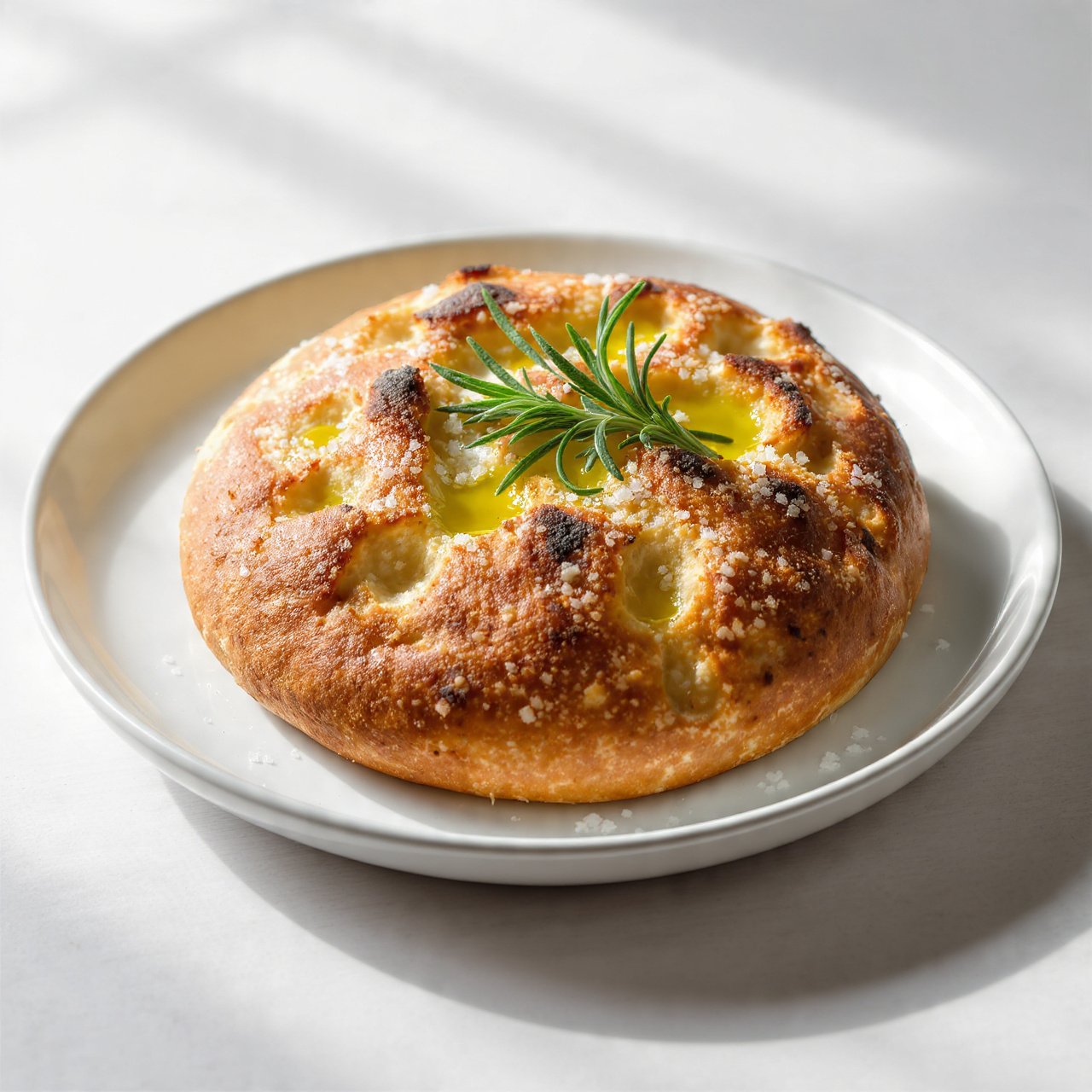
If you have ever torn into a piece of focaccia at a great Italian restaurant, you know the feeling. That shatteringly crisp bottom, the cloud-soft interior, the pools of olive oil glistening in every dimple. It feels like something reserved for professional bakers. But here is the secret: sourdough focaccia is one of the most forgiving, low-effort breads you can make at home, and your sourdough starter is the only leavening you need.
This focaccia sourdough recipe works beautifully as a same-day bake when you are short on time, or as an overnight sourdough focaccia when you want maximum depth of flavor. Either way, you are getting golden, crispy edges, a pillowy open crumb, and that unmistakable tang that only a live sourdough starter can deliver.
Using the right pan and a genuinely good olive oil is not just a suggestion here. It is the difference between focaccia that is merely good and focaccia that disappears in minutes. A heavy rimmed baking pan conducts heat evenly for that legendary crisp bottom, and a fruity, high-quality extra virgin olive oil soaks into every pore of the dough as it bakes.
Same-Day or Overnight: Which Is Better?
Both versions of this easy sourdough focaccia bread recipe are genuinely delicious, but they suit different schedules and palates.
Same-Day Sourdough Focaccia:
- Mix in the morning, bake by late afternoon
- Lighter, milder flavor
- Great when you want fresh bread fast
- Best when your starter is very active and at its peak
Overnight Sourdough Focaccia:
- Mix the night before, bake the next morning or afternoon
- Deeper, tangier, more complex flavor
- The cold ferment relaxes the gluten for an even more open crumb
- Truly the version most home bakers prefer once they try it
Chef's Tip: Your starter is the engine of this bread. Make sure it has been fed within the last 4 to 8 hours and is actively bubbly and domed before you begin. A sluggish starter means a dense focaccia, so if yours looks flat, give it another feed and wait another few hours.
How to Get the Perfect Dimples and Crispy Bottom
The two most iconic things about focaccia, those deep finger-pressed dimples and the shatteringly crisp base, come down to two simple techniques.
For the dimples, use well-oiled fingers and press firmly all the way down to the bottom of the pan. Do not be timid. These pockets are what trap the olive oil and create those gorgeous golden pools as the bread bakes. If your dough springs back stubbornly, let it rest for 10 minutes and try again.
For the crispy bottom, you need three things: a well-oiled pan (do not skimp), a hot oven (450 degrees F is not negotiable), and a heavy metal baking pan rather than a glass dish. The direct metal contact is what gives the base that unmistakable crunch.
Bread flour can be swapped in for all-purpose flour if you want an extra chewy crumb with a bit more structure. Both work beautifully in this focaccia with sourdough starter.
Topping Ideas Beyond Rosemary and Salt
Classic rosemary and flaky salt will never let you down, but sourdough focaccia is an endlessly versatile canvas. Here are some combinations worth trying:
- Caramelized onion and fresh thyme
- Sliced cherry tomatoes, garlic, and basil
- Pitted olives and lemon zest
- Thinly sliced potato, rosemary, and pecorino
- Everything bagel seasoning for a fun, shareable brunch bread
Whatever you choose, press toppings gently into the dimpled dough just before baking so they nestle in and caramelize rather than sitting on the surface.
Chef's Tip: A light drizzle of olive oil over your toppings right before the loaf goes into the oven helps everything caramelize evenly and keeps delicate herbs from burning under the high heat.
Ready to bake the best sourdough focaccia of your life? Here is the full step-by-step recipe:
Sourdough Focaccia Bread (Crispy, Airy, and Incredibly Easy)
This easy sourdough focaccia bread recipe delivers a golden, crispy crust with a pillowy, airy crumb using nothing but your sourdough starter. Perfect for same-day baking or an overnight rise for even deeper flavor.
Ingredients
- 1 cup active sourdough starter, fed and bubbly, at peak activity
- 1 1/4 cups warm water, around 80 degrees F (27 degrees C)
- 3 cups all-purpose flour, bread flour works great too for extra chew
- 1 1/2 tsp fine sea salt
- 4 tbsp extra virgin olive oil, divided, plus more for the pan
- 1 tsp flaky sea salt, for topping, Maldon or similar
- 2 tbsp fresh rosemary, roughly chopped, optional but highly recommended
Instruction
In a large bowl, combine the active sourdough starter and warm water. Stir until loosely combined.
Add the flour and fine sea salt. Mix with your hands or a sturdy spatula until no dry flour remains and a shaggy, sticky dough forms. Do not knead.
Drizzle 2 tablespoons of olive oil over the dough, turning it to coat. Cover the bowl tightly with plastic wrap or a damp towel.
For same-day focaccia: Allow the dough to bulk ferment at room temperature for 4 to 6 hours, or until it has roughly doubled and looks bubbly and airy. For overnight focaccia: Refrigerate the covered dough for 12 to 18 hours for a deeper, more complex flavor.
Generously coat a 9x13-inch rimmed baking pan with the remaining 2 tablespoons of olive oil, making sure the sides are well covered.
Gently transfer the dough into the prepared pan. Using oiled fingertips, stretch the dough toward the edges of the pan as best you can without tearing it. If it resists, let it rest for 10 minutes and stretch again.
Cover loosely and let the dough proof at room temperature for 1 to 2 hours, until it looks puffy, bubbly, and fills the pan.
Preheat your oven to 450 degrees F (230 degrees C) during the final 30 minutes of proofing.
Once proofed, drizzle a little more olive oil over the top. With well-oiled fingers, firmly dimple the entire surface of the dough, pressing all the way down to the pan to create those signature deep pockets.
Scatter the fresh rosemary over the top and finish with a generous pinch of flaky sea salt.
Bake for 25 to 30 minutes, until the focaccia is deep golden brown on top and the edges pull away from the sides of the pan.
Remove from the oven and let cool in the pan for 5 minutes, then transfer to a wire rack. Slice and serve warm.
Equipment
- Large mixing bowl
- 9x13-inch rimmed baking pan
- Plastic wrap or damp kitchen towel
- Wire cooling rack
- Bench scraper (optional but helpful)
Notes
Serving, Storing, and Sharing Your Focaccia
Sourdough focaccia is best eaten warm, within an hour or two of baking, when the crust is at its crispiest and the crumb is still tender and moist. Tear it into generous pieces and serve it alongside a bowl of marinara for dipping, a simple arugula salad, or a spread of charcuterie and aged cheeses.
Leftovers store well at room temperature in an airtight container for up to 2 days. To revive the crust, pop slices directly onto the oven rack at 375 degrees F for 5 minutes. The result is remarkably close to fresh-baked. For longer storage, slice and freeze the focaccia for up to 2 months.
Whether you found this through a search for an easy sourdough focaccia bread recipe, stumbled onto it looking for a sourdough Zopf alternative, or simply had a hungry starter and a free afternoon, this bread is going to become a staple in your kitchen. Once you understand how forgiving and rewarding it is, you will find yourself baking it on repeat.