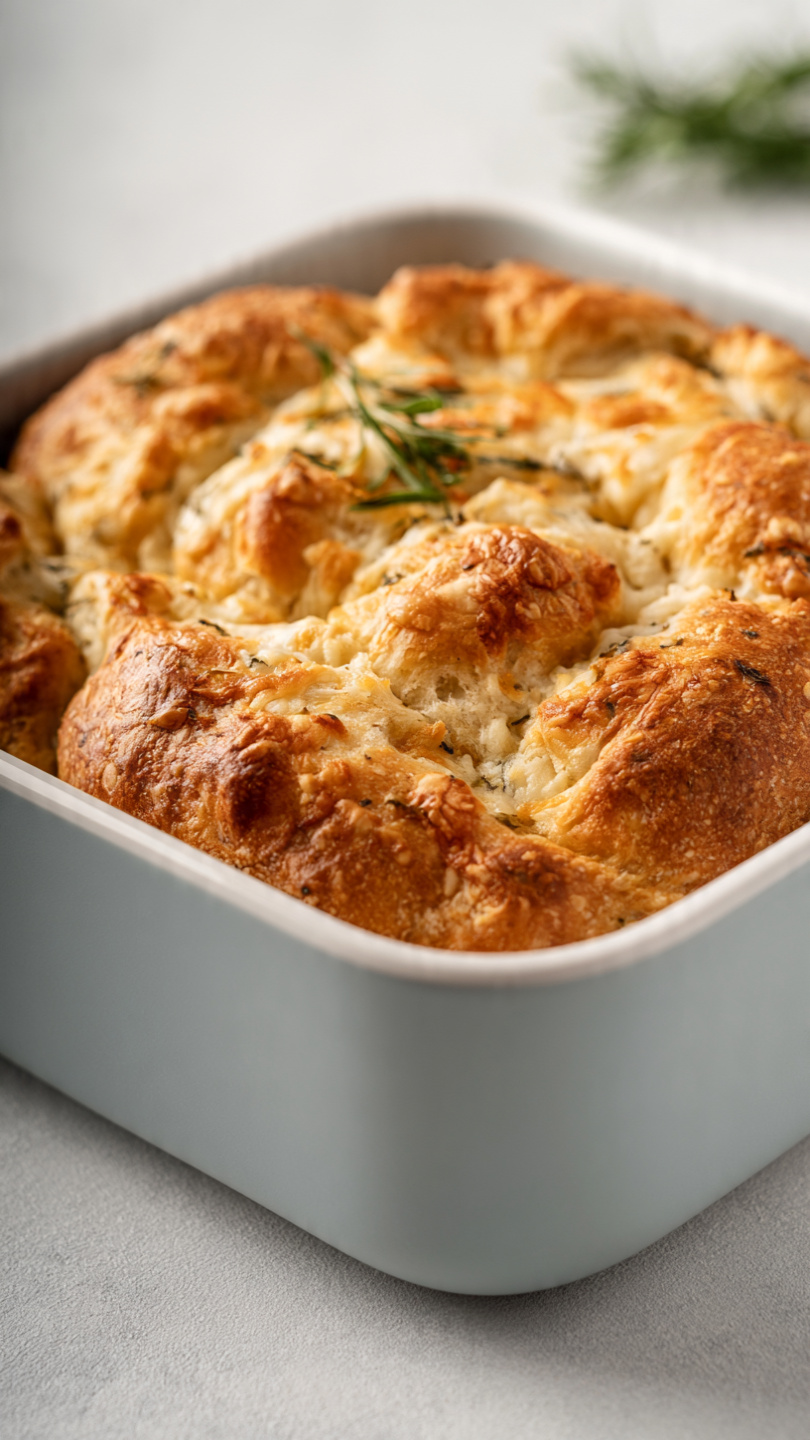
Sourdough Cheese Bread (Crusty Dutch Oven Cheddar Loaf)
This sourdough cheese bread is a golden, crackling Dutch oven loaf loaded with sharp cheddar and a tangy, chewy crumb. It's the easy bread recipe you'll make on repeat every single weekend.

The Sourdough Cheese Bread You Will Make Every Single Weekend
There is a specific kind of magic that happens when you lift the lid off a screaming-hot Dutch oven and a cloud of steam reveals a deeply bronzed, crackle-crusted loaf with rivers of melted cheddar running through every inch of the crumb. This is that bread. This Dutch Oven Cheese Bread recipe combines everything you love about a classic sourdough boule with a bold, savory cheddar pretzel sourdough loaf energy that makes it impossible to slice just one piece.
Whether you have been baking sourdough for years or this is your first real loaf, this recipe is approachable, forgiving, and wildly rewarding. We are talking a chewy, open crumb, a crust that shatters when you tap it, and a flavor that lands somewhere between tangy artisan sourdough and the world's best grilled cheese. Get this bread. Seriously.
Why This Recipe Works So Well
Let's talk about what makes this loaf genuinely special, because it is more than just throwing cheese into dough.
- The cold overnight proof develops deep, complex flavor and makes the loaf dramatically easier to score cleanly.
- Freshly shredded cheese melts into silky, gooey pockets rather than greasy clumps. Buy a block and shred it yourself.
- The Dutch oven method traps steam during the first phase of baking, giving the loaf the oven spring and crackling crust that a regular sheet pan simply cannot replicate.
- A bubbly, active starter is the engine of the whole operation. If your starter is not lively, the dough will not rise properly, no matter how perfect everything else is.
This is fundamentally an easy bread recipe using a Dutch oven, but it rewards patience. The active hands-on time is actually quite short; most of the work is just waiting.
The right equipment genuinely transforms this bake. A heavy cast iron Dutch oven, a proper bread lame for scoring, and a kitchen scale for accuracy are the three tools that separate a good loaf from a truly great one.
Choosing Your Cheese: The Heart of the Loaf
This is a cheddar bread at its soul, and the cheese selection matters more than almost any other ingredient. Here is what works best:
- Extra sharp cheddar: The gold standard. Bold, tangy, slightly crumbly, and it melts into gorgeous orange pools throughout the crumb.
- Gruyere: Optional but transformative. It adds a nutty, slightly sweet depth that rounds out the sharpness of the cheddar beautifully.
- Pepper jack: Swapping half the cheddar for pepper jack gives you subtle heat in every bite, a wonderful Dutch Oven Bread variation for spice lovers.
- Smoked gouda: For a loaf with a campfire, almost bacon-like richness. Pairs brilliantly with a bowl of tomato soup.
Chef's Tip: Always shred your own cheese from a block. Pre-shredded bags contain potato starch or cellulose to prevent clumping, and that coating inhibits proper melting. Freshly shredded cheese incorporates into the dough far more smoothly.
Understanding the Timeline (No Surprises)
Sourdough bread is a project, not a Tuesday night throw-together, and understanding the timeline upfront makes the whole process relaxed rather than stressful.
Same-day bake (long day): Feed starter in the morning. Mix dough in the early afternoon. Bulk ferment through the evening. Shape, cold proof overnight, and bake the next morning.
Weekend rhythm (most popular): Feed starter Friday evening. Mix dough Saturday morning. Bulk ferment through the day. Shape Saturday evening. Cold proof overnight. Bake Sunday morning to fresh bread for brunch.
The cold proof is not just logistical convenience. It is flavor development time. The slower, cooler fermentation produces more acetic acid, which is the compound responsible for that classic sourdough tang. Skipping the cold proof will give you a milder, softer loaf. Both are delicious; the overnight version is just noticeably more complex.
Tips for a Perfect Crust Every Time
The Dutch oven is the secret weapon in every Bread Recipe In Dutch Oven, and using it correctly makes all the difference.
- Preheat the Dutch oven fully. At least 45 minutes at 500 degrees F. You want it genuinely nuclear.
- Score with confidence. A shallow, hesitant score will tear. One clean, decisive slash at a 30 to 45 degree angle lets the loaf bloom properly.
- Do not skip the covered bake. The first 20 minutes with the lid on traps steam from the dough itself, keeping the surface supple long enough for maximum oven spring.
- Go darker than you think. This loaf can handle deep, dark color. Pale golden is underbaked. Aim for a rich mahogany that looks almost too dark. The interior will be perfectly moist.
Warning: The cheese that escapes onto the parchment during baking will caramelize into crispy, golden lacy bits around the bottom of the loaf. Do not discard these. They are arguably the best part.
Ready to bake the most impressive loaf of your life? Here is the complete step-by-step recipe:
Sourdough Cheese Bread (Crusty Dutch Oven Cheddar Loaf)
This sourdough cheese bread is a golden, crackling Dutch oven loaf loaded with sharp cheddar and a tangy, chewy crumb. It's the easy bread recipe you'll make on repeat every single weekend.
Ingredients
- 3 cups bread flour, plus more for dusting; all-purpose works in a pinch
- 3/4 cup active sourdough starter, fed and bubbly, at peak activity
- 3/4 cup warm water, about 90 degrees F (32 degrees C)
- 1 1/2 tsp fine sea salt
- 1 1/2 cups sharp cheddar cheese, freshly shredded; extra sharp preferred for bold flavor
- 1/2 cup gruyere cheese, shredded; optional but highly recommended
- 1/2 tsp garlic powder, optional, for a savory boost
- 1 tbsp olive oil, for greasing the proofing bowl
Instruction
In a large mixing bowl, combine the bread flour, salt, and garlic powder (if using) and whisk together until evenly distributed.
Add the bubbly sourdough starter and warm water to the dry ingredients. Mix with a wooden spoon or your hands until a shaggy dough forms and no dry flour remains. Cover the bowl with a damp towel and let it rest for 30 minutes (this is the autolyse).
After the rest, perform 4 sets of stretch-and-folds over the next 2 hours: every 30 minutes, reach under the dough, stretch it up as high as it will go, then fold it over itself. Rotate the bowl 90 degrees and repeat 4 times per set.
During the third set of stretch-and-folds, gently work in the shredded cheddar and gruyere, laminating the cheese throughout the dough.
After the final fold, cover the bowl loosely and let the dough bulk ferment at room temperature (70 to 75 degrees F) for 4 to 8 hours, until it has grown by about 50 percent and looks bubbly and airy.
Lightly flour your work surface. Turn the dough out, gently pre-shape it into a round by folding the edges to the center, flip it seam-side down, and let it rest uncovered for 20 minutes.
Line a medium bowl or banneton with a well-floured kitchen towel. Shape the dough into a tight boule by folding the edges into the center once more, then place it seam-side up into the prepared bowl.
Cover the bowl with plastic wrap and refrigerate overnight, or for at least 8 hours and up to 18 hours. A cold proof develops the tangy sourdough flavor and makes scoring much easier.
When ready to bake, place your cast iron Dutch oven (with its lid) into the oven and preheat to 500 degrees F (260 degrees C). Allow the Dutch oven to preheat for at least 45 minutes.
Cut a sheet of parchment paper to fit your Dutch oven. Remove the cold dough from the refrigerator and carefully invert it seam-side down onto the parchment. Score the top with a sharp bread lame or serrated knife using one confident slash or a decorative pattern.
Using the parchment as a sling, carefully lower the dough into the screaming-hot Dutch oven. Place the lid on and bake covered for 20 minutes.
Remove the lid and reduce the oven temperature to 450 degrees F (230 degrees C). Continue baking uncovered for 25 to 30 minutes, until the crust is a deep, burnished mahogany brown and an instant-read thermometer inserted into the center reads 205 to 210 degrees F (96 to 99 degrees C).
Carefully lift the loaf out of the Dutch oven using the parchment and transfer it to a wire rack. Let it cool for at least 1 hour before slicing. The interior is still setting up as it cools.
Equipment
- Large mixing bowl
- 5.5-quart (or larger) cast iron Dutch oven with lid
- Bread lame or sharp serrated knife
- Banneton proofing basket or medium bowl
- Parchment paper
- Kitchen scale (recommended)
- Instant-read thermometer
- Wire cooling rack
Notes
Serving Suggestions and Dutch Oven Bread Variations
This sourdough cheese bread is extraordinary on its own with good butter, but here is how to take it further:
- Serve warm alongside a hearty tomato bisque or French onion soup for a full Dutch Oven Bread Sweet and savory pairing.
- Toast thick slices and top with avocado, a fried egg, and hot sauce for the best breakfast toast of your life.
- Use day-old bread for the most decadent grilled cheese sandwiches, French onion croutons, or a savory bread pudding.
- Experiment with add-ins: Pickled jalapenos and cheddar, rosemary and parmesan, or caramelized onion and gruyere are all spectacular Dutch Oven Bread variations worth exploring.
However you slice it, and whoever you share it with, this cast iron Dutch oven bread has a way of making any ordinary day feel like a celebration.