Sourdough Focaccia Bread Recipe (Crispy, Airy, and Incredibly Easy)
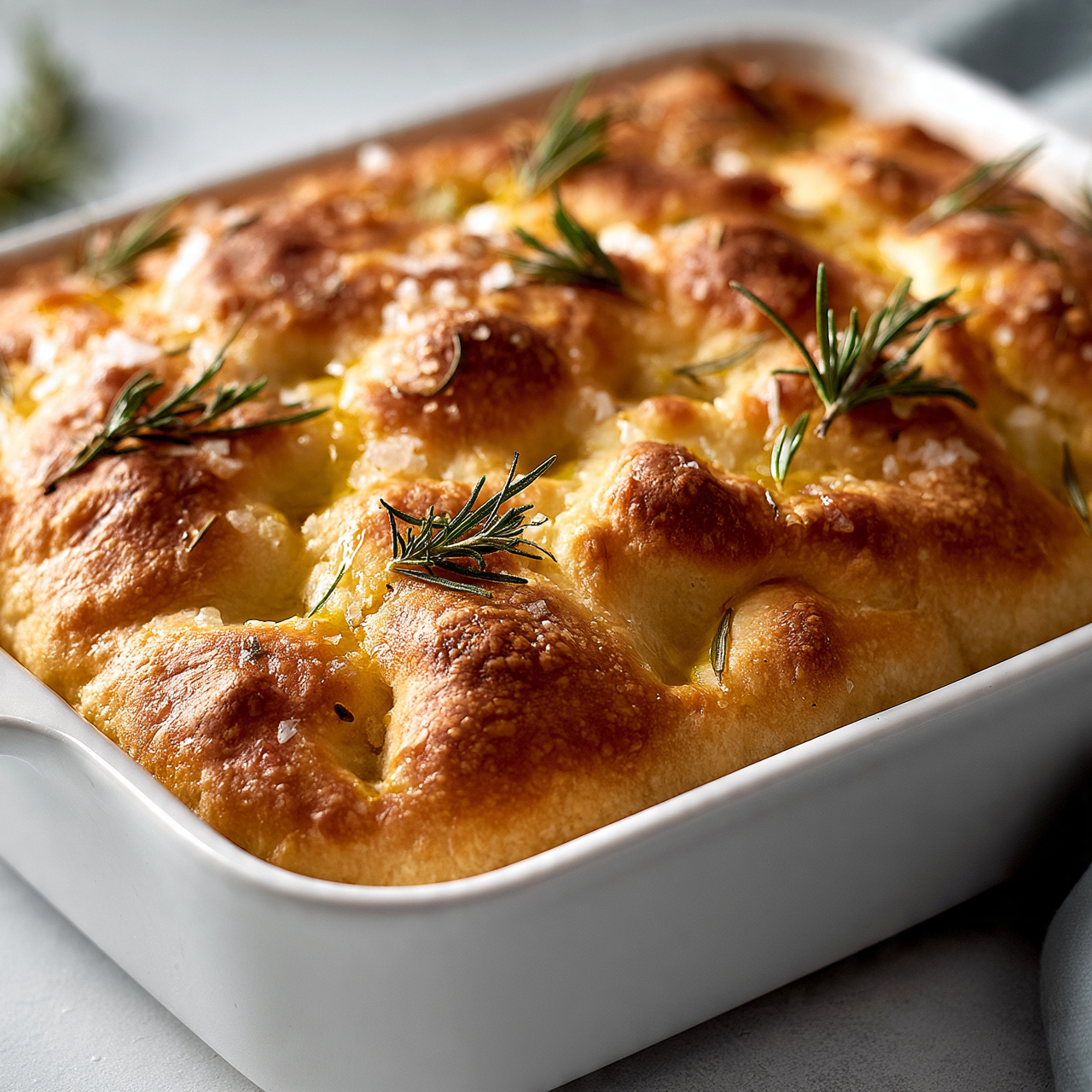
This sourdough focaccia bread recipe delivers a golden, crispy crust with a pillowy, airy interior using your sourdough starter. It is one of the easiest baked bread recipes you will ever make, and the flavor is absolutely unbeatable.

The Sourdough Focaccia Recipe You Will Make Over and Over Again
If you have ever pulled a pan of golden, dimpled focaccia from the oven and watched everyone in the room immediately stop what they were doing, you already know the power of a great focaccia bread recipe. This sourdough version takes things one step further. The long, slow fermentation from your sourdough starter adds a subtle tang and depth of flavor that you simply cannot get from a quick focaccia bread recipe made with commercial yeast alone. And the best part? The method is genuinely easy.
This is not fussy bread. There is no shaping, no scoring, no steam injection. You mix, you fold a couple of times, you let time do the work, and then you dimple and bake. The result is a crispy, golden crust, an impossibly airy interior, and that signature olive oil richness in every single bite. Whether you are a seasoned sourdough baker or you are just looking for easy focaccia bread recipes to add to your rotation, this one belongs in your permanent collection.
Why Sourdough Makes This Focaccia Special
Regular focaccia is already delicious. Sourdough focaccia is on another level entirely.
When you use an active sourdough starter as the leavening base, a few things happen that a fast focaccia bread recipe simply cannot replicate:
- Complex flavor. The natural acids produced during fermentation give the bread a gentle tang and a richness that tastes like it came from a good Italian bakery.
- Better texture. Longer fermentation breaks down gluten more fully, resulting in that signature open, chewy crumb with large airy pockets.
- Improved digestibility. The fermentation process partially breaks down gluten and phytic acid, which many people find easier on their stomachs.
- Staying power. Sourdough bread tends to stay fresher longer than yeast-only breads, thanks to its natural acidity.
That said, this recipe also includes optional instant yeast for those days when you want quick focaccia bread without sacrificing that sourdough character. Even with yeast, the starter still adds flavor. Consider it your backup plan.
Choosing the Right Ingredients and Tools
Good focaccia lives and dies by the quality of two things: your olive oil and your pan. A generous pour of a fruity, high-quality extra virgin olive oil is not optional here, it is the soul of the bread. The right heavy-duty baking pan also ensures even heat distribution for that perfectly golden bottom crust.
How to Get That Perfect Dimpled Top
The dimples in focaccia are not just for looks. They serve a real purpose. When you press your fingers deep into the risen dough just before baking, you are doing two things: redistributing gas bubbles to create an even, open crumb, and creating little pools for olive oil and toppings to collect in as the bread bakes.
Chef's Tip: Do not be timid with the dimpling. Press your fingers all the way to the bottom of the pan. If you are too gentle, the dough springs back, the dimples disappear in the oven, and you lose that classic focaccia look and texture.
Right before baking, drizzle a little more olive oil over the top and watch it pool into every dimple. That is where the magic lives.
Topping Ideas Beyond Rosemary and Sea Salt
Rosemary and flaky salt is the classic for a reason, but once you understand the base recipe, the topping options are essentially endless. Here are some combinations worth trying:
- Caramelized onion and thyme for something deeply savory and sweet
- Olives, sun-dried tomatoes, and feta for a Mediterranean take
- Thinly sliced potato, rosemary, and parmesan for a hearty, satisfying version
- Fig jam and gorgonzola for a sweet and savory appetizer focaccia
- Everything bagel seasoning for an unexpectedly perfect crowd pleaser
The key rule with toppings: press them gently into the dough after dimpling so they bake into the bread rather than just sitting on top.
The Long Rise vs. The Quick Rise
This recipe gives you two paths, and both work beautifully.
The quick focaccia bread route: Let the dough bulk ferment at room temperature for 4 to 6 hours. This works great when your kitchen is warm and your starter is very active. The flavor is mild and the bread is still absolutely delicious.
The overnight cold rise: After mixing, pop the dough in the oiled pan, cover it tightly, and refrigerate overnight for up to 18 hours. Pull it out, let it come to room temperature for about an hour, then dimple and bake. The flavor is noticeably more complex and tangy, and the crumb is even more open and airy. This is the method to use when you want truly impressive results with almost zero active effort.
For a baked bread recipe that genuinely impresses, the cold rise is always worth it when you have the time.
Ready to get your hands in the dough? Here is the full step-by-step recipe:
Sourdough Focaccia Bread Recipe (Crispy, Airy, and Incredibly Easy)
This sourdough focaccia bread recipe delivers a golden, crispy crust with a pillowy, airy interior using your sourdough starter. It is one of the easiest baked bread recipes you will ever make, and the flavor is absolutely unbeatable.
Ingredients
- 1 cup active sourdough starter, fed and bubbly, at peak activity
- 2 1/2 cups all-purpose flour, or bread flour for a chewier crumb
- 3/4 cup warm water, about 90 degrees F, not boiling
- 4 tbsp extra virgin olive oil, divided, plus more for drizzling
- 1 1/2 tsp fine sea salt
- 1/2 tsp instant yeast, optional, speeds up the rise significantly
- 1 tsp flaky sea salt, for topping, Maldon or similar
- 2 tbsp fresh rosemary, roughly chopped, or substitute dried
- 3 garlic cloves, thinly sliced, optional topping
- 1/2 cup cherry tomatoes, halved, optional topping
Instruction
In a large bowl, combine the bubbly sourdough starter, warm water, and 2 tablespoons of olive oil. Stir until well mixed.
Add the flour, fine sea salt, and instant yeast (if using). Mix with a stiff spatula or your hands until a shaggy, sticky dough forms. Do not knead. The dough will look rough and that is perfectly fine.
Cover the bowl with plastic wrap or a damp kitchen towel. Let the dough rest at room temperature for 30 minutes.
Perform one round of stretch and fold: wet your hand, grab one side of the dough, stretch it upward, and fold it over the center. Rotate the bowl 90 degrees and repeat four times around the dough. This counts as one set. Cover and rest for another 30 minutes, then repeat the stretch and fold one more time.
Pour the remaining 2 tablespoons of olive oil into a 9x13 inch rimmed baking pan and spread it evenly across the bottom. Transfer the dough into the pan and gently turn it to coat it in oil.
Cover loosely and let the dough rise at room temperature for 4 to 12 hours, or refrigerate overnight for a deeper, more complex sourdough flavor. The dough should roughly double and look bubbly.
When ready to bake, preheat your oven to 450 degrees F (230 degrees C). If you have a baking stone or steel, place it on the center rack now.
Generously drizzle olive oil over the top of the dough. Using all ten fingers, press firmly down into the dough to create deep, signature focaccia dimples across the entire surface. Do not be shy here.
Scatter the rosemary, sliced garlic, and cherry tomatoes over the top. Finish with a generous pinch of flaky sea salt.
Bake for 22 to 26 minutes, until the top is deep golden brown and the edges are visibly crispy. The bottom should be golden as well when you lift a corner with a spatula.
Let the focaccia cool in the pan for 5 minutes, then transfer to a wire rack. Slice and serve warm.
Equipment
- Large mixing bowl
- 9x13 inch rimmed baking pan
- Plastic wrap or damp kitchen towel
- Bench scraper or stiff spatula
- Wire cooling rack
- Oven thermometer (recommended)
Notes
Serving, Storing, and What to Do With Leftovers
Freshly baked sourdough focaccia is spectacular on its own, warm from the oven with nothing more than a little extra olive oil for dipping. But it also plays incredibly well with others.
Ways to serve it:
- Alongside soups, stews, or salads as a hearty bread
- Sliced horizontally and used as the base for a sandwich
- Torn into pieces and served as an appetizer with whipped ricotta or hummus
- Cubed and toasted for next-level croutons
Storage tips: Wrap leftover focaccia tightly and store at room temperature for up to 2 days. For the crispiest results when reheating, use the oven rather than the microwave. A 375 degree F oven for 5 to 8 minutes brings it right back to life. You can also freeze individual slices in an airtight bag for up to one month, which makes this one of the most practical easy focaccia bread recipes to keep in your freezer rotation.
However you enjoy it, one thing is certain: this is the kind of bread that gets requested again and again.